
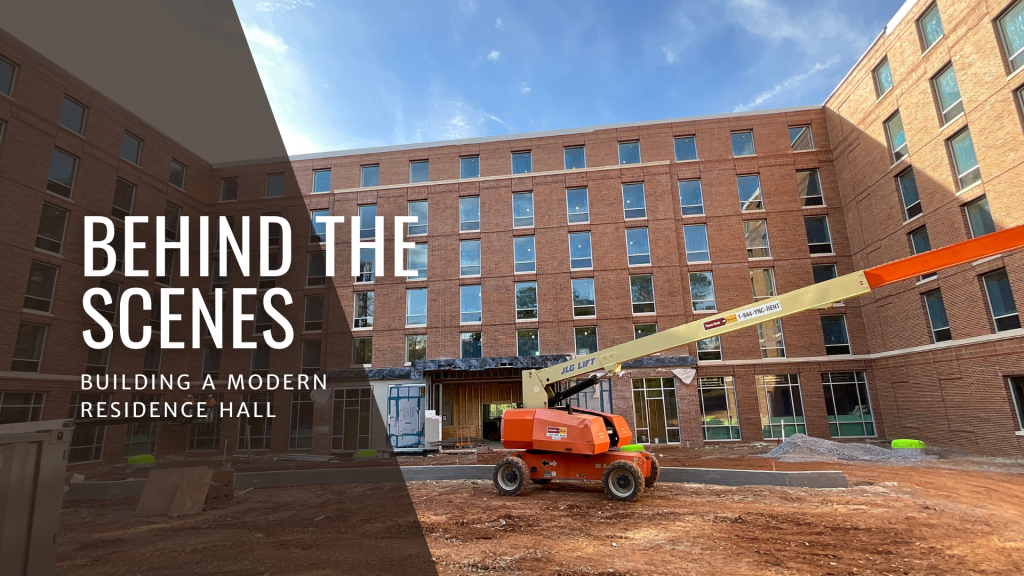
A new first-year residence hall at the University of Georgia—Building 2266—is under construction, and we’re giving you a behind the scenes look at what goes into building a modern-day residence hall.
Years of research and planning go into creating a living space that’s both comfortable and community-oriented. Decisions are based on lessons learned from past builds, student preferences and expert recommendations.
With the help of many design professionals, we tapped into hundreds of years of collective experience to improve operational reliability. We can’t prevent equipment failure, but we can limit the effects a failure has on the residential experience.”
Matthew Deason, director of Facilities, University Housing
Building 2266 is designed with robust systems engineered for steady, dependable performance and, when a problem arises, redundant backups activate automatically, so students never know there is an issue. By planning for possible system failures, we ensure a consistently comfortable space for the more than 500 students who will live here every year.
- Dedicated Outdoor Air System (DOAS):
- Continuously circulates fresh, filtered air throughout the entire building
- Adjusts humidity levels and reduces external pollutants
- Works a bit like inflating a balloon—by maintaining positive air pressure (filling the building with enough air) it keeps outdoor air from seeping in unintentionally
- Designed to be highly efficient while providing consistent, clean air
- Hot water:
- Redundant systems ensure that students always have hot water.
- The main supply comes from across campus, and a 500-gallon electric backup tank in the basement activates if the primary source falters.
- Bathroom materials:
- Countertops and surfaces are designed to be cleaned quickly to a high standard of sanitation while being functional and attractive.
- Tile floors and surrounds are chosen so a specialty machine can be used to quickly and thoroughly clean the floors. It works by pressure washing the floor then vacuuming up the water.
- Laundry:
- Commercial grade appliances provide a reliable resource for students who are short on time.
- Exhaust systems move laundry room air to the exterior, so smells don’t accumulate.
- Exterior:
- Behind the brick exterior, water-proofing systems ensure any water absorbed by the bricks is quickly wicked away.


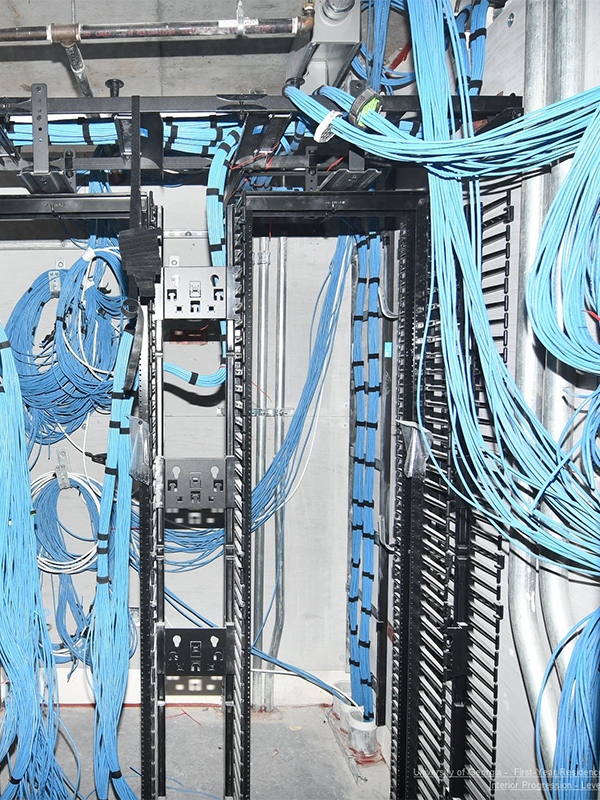

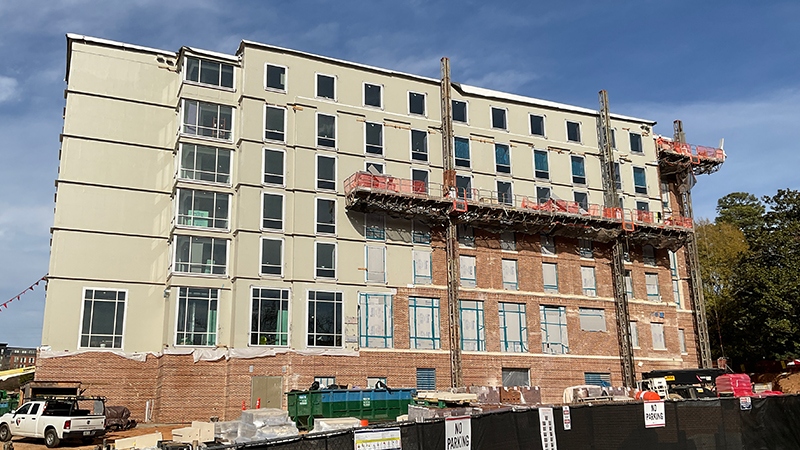


Click on an image to open slideshow
In addition to these systems, the building will have amenities designed to help students feel comfortable and build community.
Halls are a space of rejuvenation for students. More than simply a place to sleep and study, they need to be spaces where students develop and grow.
Linda Kasper, executive director, University Housing
Living on campus means first-year students are surrounded by peers who are navigating the same new experiences. By intentionally including inviting spaces for gathering, studying and living together, we encourage students to form support networks that help them thrive both academically and socially.
- Community kitchen: Space for residents to bake cookies together
- Community bathrooms: Designed to help students interact with peers during their daily routines while still providing privacy when it’s needed
- Lounges: Flexible spaces for residents to gather and build connections
- Study lounges: Students don’t have to walk across campus to find study rooms when they are conveniently located in their building.
- Laundry: Open, community spaces increase resident interactions and foster community.


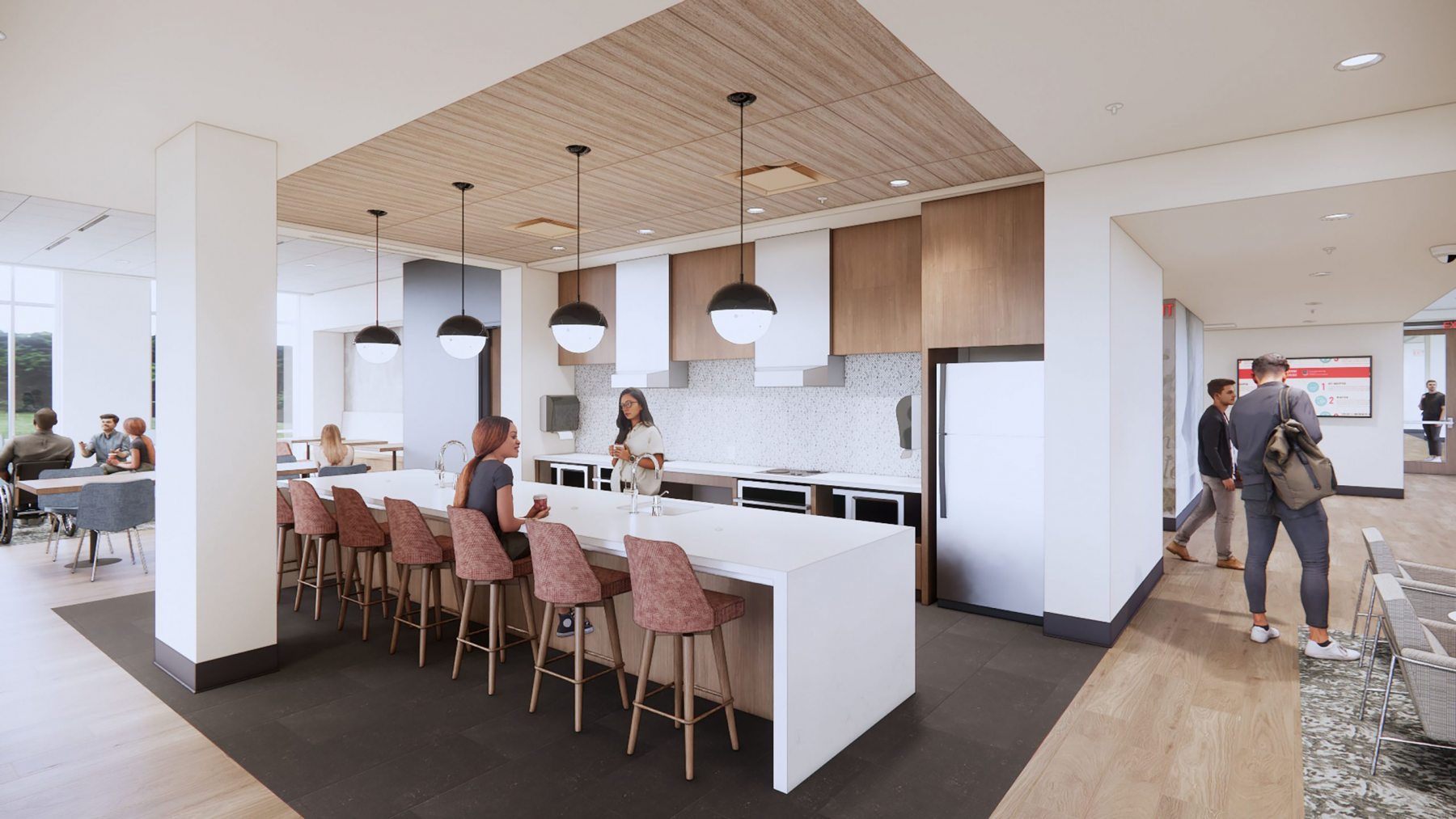
Click on an image to open slideshow
By using insights from previous construction projects and tailoring design aspects to current students’ needs, University Housing is preparing to support future students for many years to come.